The short version
The challenge
As the company grew, customer information was spread across inboxes, spreadsheets and an off-the-shelf CRM nobody liked using. Managers had no reliable view of the pipeline, and handovers between colleagues lost context.
What we built
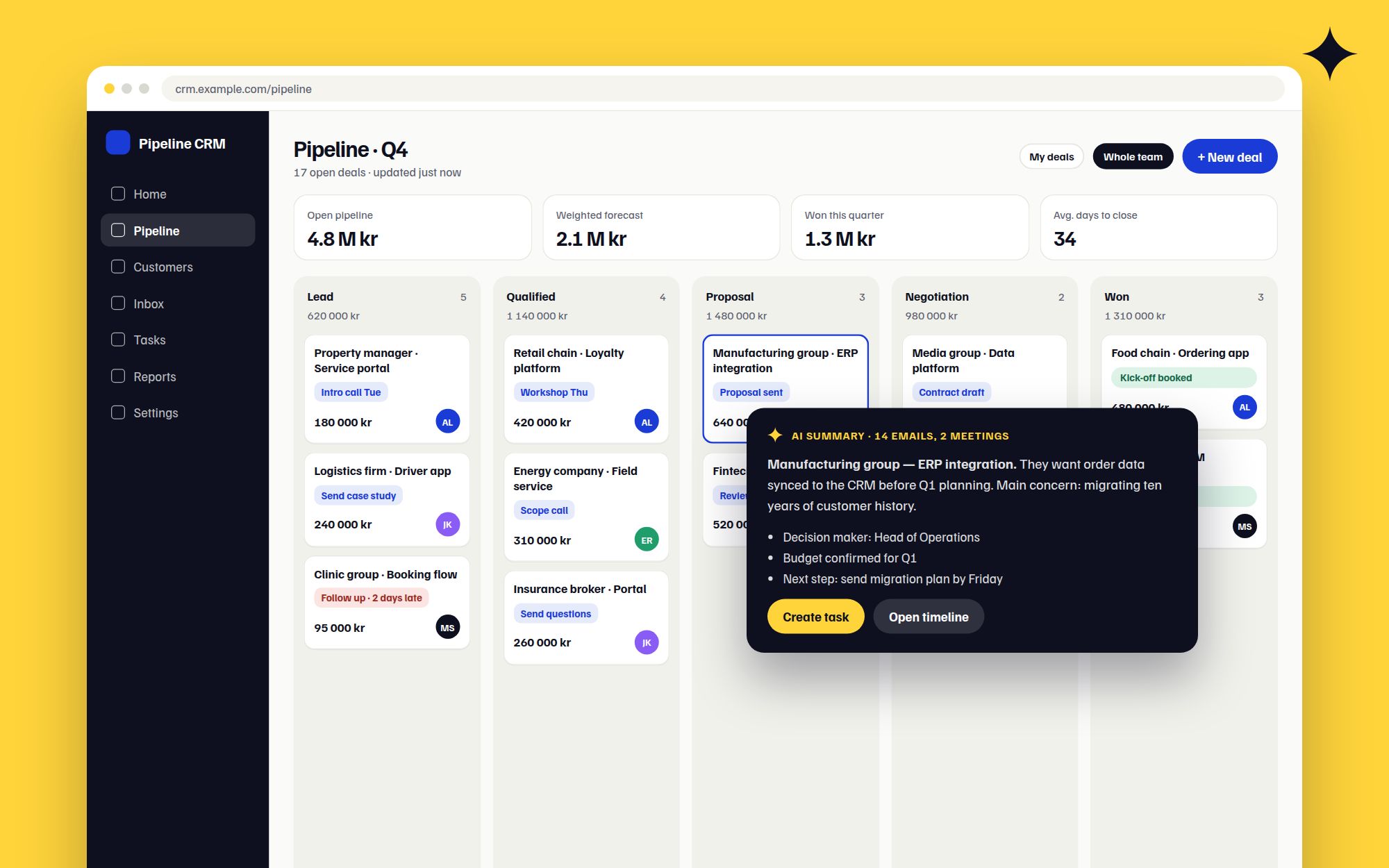
A CRM shaped around the company’s own sales process: pipeline boards, one shared timeline per customer, email and calendar sync, roles and permissions, management dashboards — and AI summaries that turn long email threads into key points and next steps.
The result
One place for every customer and deal. The team keeps the pipeline up to date because it is faster than not doing it, and management forecasts from live data instead of Friday spreadsheets.
What we built
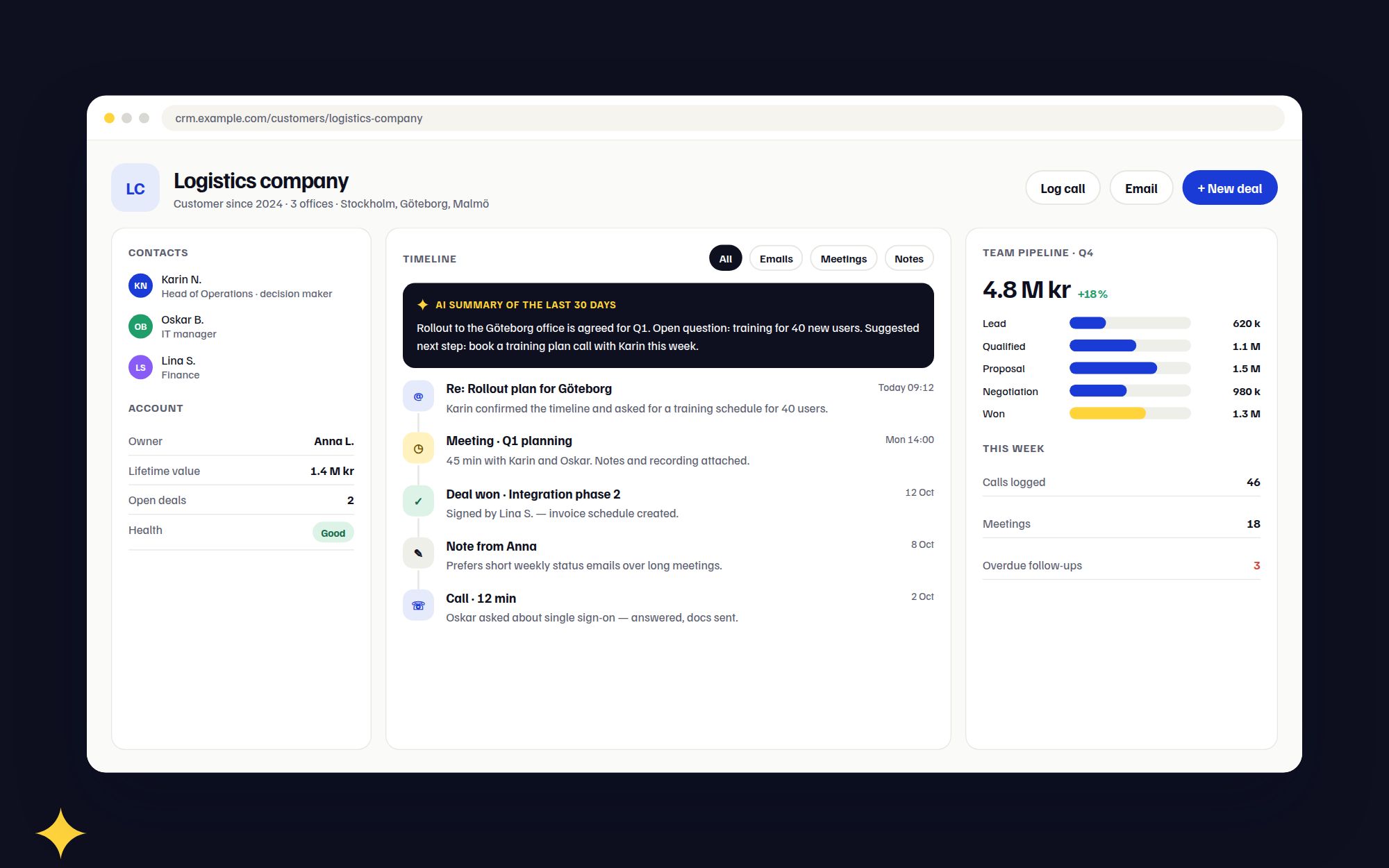
We mapped how the team really sells before writing any code, then built the CRM around those steps — not the other way round.
- Pipeline boards that match the company’s real sales stages
- One timeline per customer: emails, calls, meetings and notes
- Two-way email and calendar sync
- AI summaries and suggested next steps for long conversations
- Roles, permissions and GDPR tools for data requests and deletion
- Dashboards for pipeline, forecast and team activity
Built with
- React
- TypeScript
- Node.js
- PostgreSQL
- LLM APIs
- AWS
How we worked
- Weeks 1–3 — Discovery: mapping the sales process with sales, management and finance
- Weeks 4–5 — Clickable prototype, tested with the sales team
- Weeks 6–14 — Weekly releases and migration of existing customer data
- Weeks 15–16 — Company-wide rollout and training
By the numbers
3 → 1
Disconnected tools replaced by one system
Live
Pipeline and forecast — no more weekly spreadsheets
16 weeks
From kick-off to company-wide rollout
Confidential client
Client names are kept confidential at our clients’ request. We are happy to tell you more about this project on a call.